
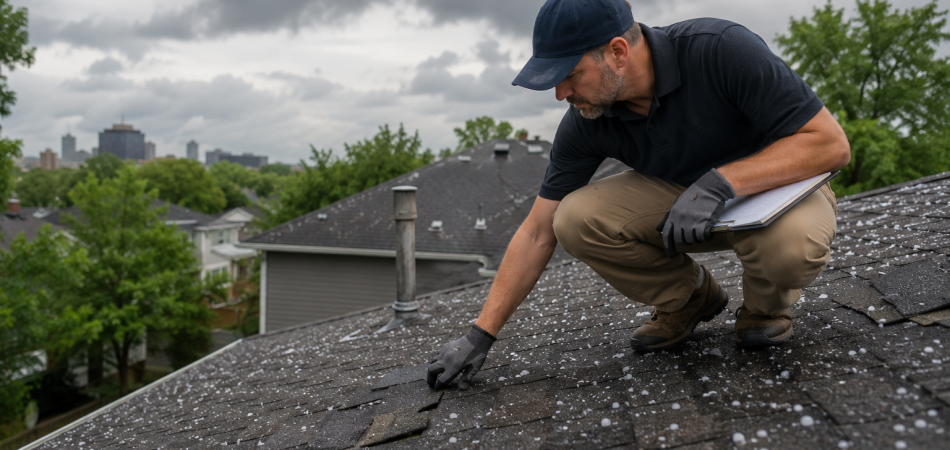
Hidden hail damage often evades the naked eye because it occurs at the microscopic level or on overlooked structural components like flashing and vents. To spot this damage, thoroughly inspect soft metals, evaluate shingle integrity for “bruises,” verify water barrier functionality, and use diagnostic tools.
Hailstorms roll through Greater Houston almost every spring, and the damage they leave behind is not always the kind you can see. A roof can look untouched from the driveway while the shingles overhead are quietly failing.
That gap between what looks fine and what is actually damaged is where a lot of claims fall apart. At Big Easy Roof Claims, we inspect Houston-area roofs after every major storm and document the damage that a glance from the ground will never reveal.
Knowing what hidden hail damage looks like puts you in control of your own claim. If a storm just passed through your neighborhood, contact us today to request a free roof inspection and get a clear, documented picture before small problems turn into leaks.
Most people assume it takes baseball-sized hail to hurt a roof, but the threshold is far lower than that. Research from the Insurance Institute for Business and Home Safety shows that hail around one inch across, roughly the size of a quarter, is enough to bruise and fracture asphalt shingles.
Size is only part of the story, though. Wind drives hail into the roof at an angle, so a smaller stone moving fast can do more harm than a larger one falling straight down. The pitch of your roof and the direction the storm traveled both change how hard any given slope gets hit.
The age and condition of your shingles matter just as much. An older roof that has already lost granules and dried out will bruise and crack at impact levels that a newer roof might shrug off. That is why two homes on the same street can take the same storm and end up with very different damage, and why a hands-on inspection beats any guess made from the curb.
The most costly hail damage hides in details that are invisible from your yard. These are the three signs we look for first on every Houston roof we inspect.
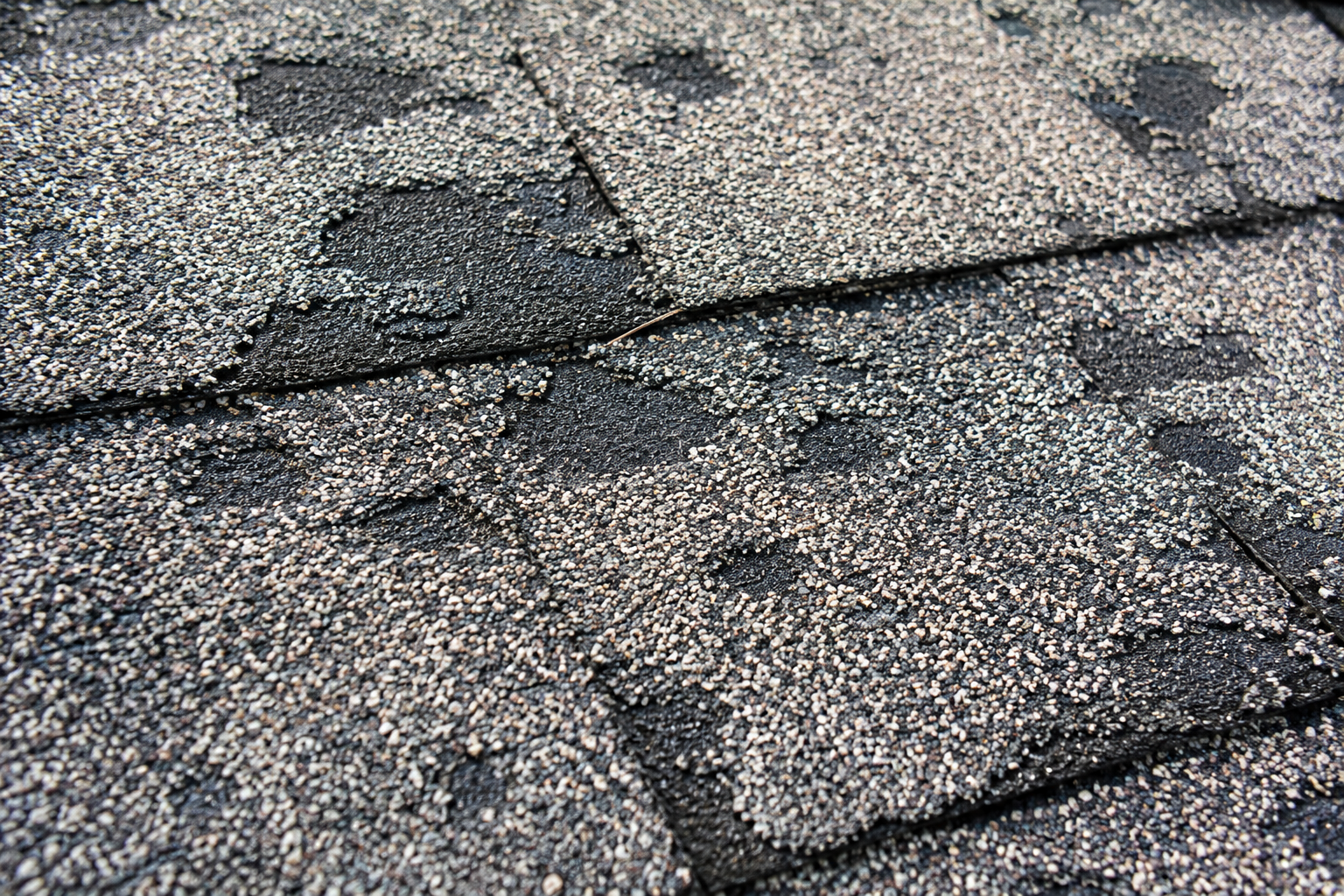 Asphalt shingles are coated with mineral granules that shield the asphalt underneath from the sun. Hail knocks those granules loose in clusters, leaving bare, darker patches scattered across the slope.
Once the asphalt is exposed, the sun starts breaking it down, and the shingle ages years ahead of schedule. A roof that should have lasted another decade can lose much of its remaining life in a single season of open exposure. The bare spots also turn brittle, so they shed even more granules with each rain that follows.
You may spot granules collecting in gutters or pooling at the bottom of downspouts, which is one of the easiest early clues to catch from the ground. A heavy line of granules after a storm is a strong reason to have the surface above checked closely, since the bald spots themselves are hard to see from below.
A hail bruise is a spot where the impact fractured the mat inside the shingle without tearing the surface. It often looks normal but feels soft, like the give of a bruise on fruit, when pressed. The colored surface can stay perfectly intact while the fiberglass mat underneath is already broken.
These soft spots are the single most overlooked form of hail damage. They rarely show up in photos and almost never read from the ground, so they get missed unless someone is on the roof checking by hand, slope by slope.
Left in place, a bruise becomes the weak point where the shingle eventually splits and lets water through. Finding and marking these spots early is exactly the kind of detail a documented inspection is built to capture, and it is often the difference between a small repair and a full tear-off later.
Hard impacts can crack the shingle mat outright or break the adhesive seal that locks each shingle to the one below it. A broken seal lets wind lift the shingle, which is how a hailstorm quietly sets up the next wind event to peel your roof.
Cracks tend to spread with every hot-and-cold cycle on a Houston roof. What starts as a hairline fracture after one storm can open into a clear leak path within a single season of expansion and contraction. The swing from humid heat to a sudden cold front speeds that cycle along.
Because both problems sit flat against the roof, they are nearly impossible to judge from the ground. Confirming them takes a close look at the shingle surface and edges, one slope at a time, which is why they so often go unrecorded.
When hail is large enough to dent metal, it is large enough to damage shingles. The soft metal around your home keeps a record of the storm even after the shingles hide their wounds.
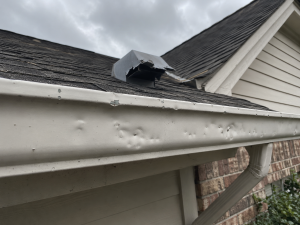 Gutters and downspouts are made of thin aluminum that dents easily, so they often show hail strikes before anything else does. Walk the perimeter and look for dimples, dents, and chipped paint along the gutter faces and the rounds of the downspouts.
If the metal closest to the ground took visible hits, the shingles above almost certainly did too. We photograph this collateral damage because it helps establish the size and direction of the hail that struck your home, and that context strengthens the rest of the documentation you keep on file.
We also note which sides of the home were hit hardest, since that usually points to where the worst roof damage sits. Make a note of the date and the storm so the photos tie to a specific event. That timeline matters if you file, since it links the damage to a covered cause rather than slow wear.
Metal vents, valley flashing, and turtle vents sit higher and take direct hits during a storm. Dents, dings, and bent edges on these components are a strong sign that the roofing field around them was struck just as hard. Soft aluminum and thin galvanized parts give way at lower impact levels than shingles, so they register the storm clearly.
This damage matters on its own, not only as a clue. Cracked flashing and dented vents are direct entry points for water, so they need to be documented as part of the full scope rather than dismissed as cosmetic. A vent boot that splits after a hailstorm can drip into an attic for months before anyone notices the stain below.
We photograph each damaged component up close and again from a few feet back for scale. That pairing makes it clear the hits are storm-related and not old wear.
Fresh hail leaves spatter marks where it knocks oxidation and dirt off metal surfaces, showing up as bright, clean spots on vents, flashing, and grilles. These marks fade within weeks, so catching them early helps confirm when the storm actually hit. On an older, oxidized vent, those clean spots almost glow, which makes them a useful timestamp for a claim.
Your outdoor air-conditioning unit is another quiet witness. Flattened or bent cooling fins on the condenser confirm hail moved through with enough force to harm your roof, and that unit damage is often coverable in its own right when it is documented alongside the roof.
The same goes for window screens, mailboxes, and painted metal doors facing the storm. Each one helps confirm the size of the hail that hit the rest of the home.
Most hidden hail damage is missed for one simple reason: nobody got close enough to find it. The table below shows what slips through a quick look and what actually catches it.
A walk-around from the yard simply cannot reach any of this, and a hurried look from a ladder is not much better. We use a documented roof inspection with drone and close-up imaging so the damage is recorded clearly, and you keep that record in hand if you decide to file a claim. That record is just as useful months later, when a slow leak finally shows up on a ceiling inside.
If you are not sure whether your roof took a hit, the safe move is to have it checked after any storm with marble-sized or larger hail. The inspection costs nothing, and it settles the question while the evidence is still fresh.
Hidden hail damage does not fix itself, and every month it sits unaddressed is another month of granule loss, spreading cracks, and rising leak risk. Catching it now, with clear documentation, is the difference between a manageable repair and a major one.
At Big Easy Roof Claims, we will get on your roof, find what a ground-level look misses, and hand you a documented record you can act on. Call us today to schedule your free hail damage inspection.
Texas policies generally give you up to a year to file a weather-related claim, though many require prompt notice once you discover damage. It is smart to document the roof early rather than wait, since hidden damage only worsens with time. The sooner you have a dated record, the cleaner your claim will be.
Yes, and this is the most common situation we see. Bruising, granule loss, and broken seals rarely show from the ground, so a roof can look perfect while it is already failing. That is exactly why this damage earns the label hidden.
Hail around one inch across, about the size of a quarter, is widely recognized as enough to damage asphalt shingles. Wind speed and the age of your roof can lower that threshold even further. Smaller hail driven by strong wind can still do real harm.
Under Texas law, an insurer cannot raise your rate or refuse to renew you based on a single weather-related claim alone. That protection exists specifically because storm damage is outside your control. It is one reason it rarely pays to ignore covered damage out of fear of a rate hike.
It can be both, and the difference matters for coverage. Functional damage like bruising and cracked mats shortens the life of the roof, which is why it needs to be documented rather than dismissed. A trained inspection separates the two clearly.
It varies, but exposed asphalt and broken seals often turn into active leaks within a few months to a season. The slow timeline is exactly why so many homeowners connect a leak to the wrong storm. Catching it early keeps a small problem from reaching your ceilings.
No. Our roof inspection and damage documentation are free, so there is no cost to find out where you actually stand. You get a clear record either way, whether or not there is damage to act on.
No. In Texas, a roofer can document and explain the damage, but cannot adjust or negotiate the claim on your behalf, so you stay in charge of filing it. Our job is to give you thorough documentation, not to speak for you to your insurer.
