
Hurricane season runs from June 1 through November 30. For Houston homeowners, preparation goes far beyond stocking bottled water. Key actionable steps include purchasing a flood policy (as most standard plans have a 30-day waiting period), learning your specific Zip Zone, and securing your exterior for high winds.
Atlantic hurricane season runs from June 1 through November 30, and Greater Houston sits squarely in its path. Storms like Hurricane Beryl in 2024 are a reminder that serious wind can reach far inland from the coast.
The homeowners who come through these storms best are the ones who prepared before the first warning. At Big Easy Roof Claims, we help Houston homeowners get ahead of that work because a little effort now protects your roof, your home, and your ability to file a clean claim later.
If you want a professional eye on yours before the season ramps up, contact us today to request a pre-season roof inspection and start with a clear baseline.
Your roof is the part of your home that takes the storm first and hardest. Understanding what it is up against makes every preparation step that follows easier to prioritize.
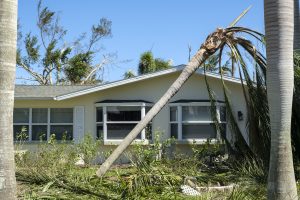 Hurricane-force and straight-line winds lift and peel shingles, tear off flashing, and drive rain under any edge they can pry open. The May 2024 derecho brought roughly 100 mph winds to the metro, and Beryl knocked out power across the region for days that same summer.
Wind rarely works alone, either. It throws branches and debris that puncture roofs, and it pairs with heavy rain that finds every weak seam the wind just opened. That combination is why a roof that was merely worn before a storm can fail completely during one.
The lesson for homeowners is simple: small weaknesses become big failures under hurricane conditions. You can see the range of hurricane roof damage we document across the Houston area after these events, and most of it traces back to a vulnerability that existed long before the storm arrived.
A loose shingle, a lifted edge, or a tired flashing seam is exactly the kind of thing wind looks for. The preparation steps below are aimed at closing those gaps before a storm can pry them open. Most of the work is simple and inexpensive, which is what makes skipping it such a costly gamble.
The single most valuable thing you can do before a storm is create a dated record of your roof while it is still intact. This baseline is what separates true storm damage from ordinary wear when you file a claim later.
Take clear photos of the roof, gutters, flashing, and your home’s exterior, and save them with their dates attached. If you cannot safely get the angles you need, a professional inspection gives you a far more thorough record than ground-level shots ever will, including the close-ups insurers tend to ask about.
Store these images somewhere you can reach them even if the power is out, such as cloud storage or your phone. After a storm, a matching set of before-and-after photos shows exactly what changed, which is hard for anyone to dispute and makes the entire claim move faster.
If your roof is more than a few years old, note its age and any past repairs in the same record. An insurer treats a documented, maintained roof very differently from one with an unknown history. That history can matter nearly as much as the storm photos themselves.
Much of the damage a Houston roof takes during a hurricane comes from the things around it, not the wind alone. Removing those hazards ahead of time is fast, inexpensive, and effective.
None of these tasks take long, but each one removes a path for water and wind to get in. Handled together a few weeks before peak season, they meaningfully lower the odds of a preventable failure, and they make any real storm damage easier to tell apart from simple neglect.
If a job feels unsafe, like a limb near power lines, leave it to a professional. The goal is a sound roofline going into the storm, not an emergency-room visit.
Hurricane season is the time to read your policy, not after a storm when it is too late to change anything. Coastal and Gulf-area policies often work differently than homeowners expect, especially around deductibles.
| Coverage or term | What it covers | What to check before a storm |
|---|---|---|
| 🏠 Dwelling | Your roof and the full structure of the home | Coverage amount still matches today’s rebuild costs |
| 💨 Windstorm / named-storm deductible | Wind and hail damage — often calculated as a percentage of dwelling value | The actual dollar amount you would owe, not just the percentage |
| 🏗️ Other structures (Coverage B) | Fences, detached garages, and gutters | Limits match what you would actually replace |
| 💧 Flood | Rising-water damage — excluded from standard homeowners policies | You carry a separate flood policy — wind coverage is not flood coverage |
The flood line is the one that surprises people most. Wind and flood are covered separately, so a standard homeowners policy will not pay for rising water no matter how severe the storm. Many homeowners near the coast carry both, and knowing your named-storm deductible in real dollars now prevents a painful surprise later.
It also helps to confirm how your policy values a roof claim. Some carriers move older roofs from replacement cost to actual cash value, and knowing which applies tells you what a payout would really look like. Your declarations page spells these terms out once you know where to look.
Finally, make sure your contact and mortgage details on the policy are current. A misrouted claim check or a missed renewal notice is an avoidable headache in the middle of storm season. A five-minute check now saves a real scramble after a storm.
Preparation is not only about the roof. A stocked kit and a current home inventory protect your family during the storm and your claim in the days afterward.
The inventory does double duty. If wind opens the roof and damages what is inside, that record makes proving the loss far simpler and faster when you file. Update it once a year, and store a copy off-site or in the cloud so a flooded or wind-damaged home cannot take your only copy with it.
Keep the kit somewhere everyone can find in the dark, and check the battery and water dates at the start of each season. A kit you assembled three hurricanes ago is only as reliable as its oldest supply.
The hours right after a storm shape how smoothly everything else goes. Acting in the right order keeps you safe and protects your claim at the same time.
For roof openings you cannot safely reach, we provide emergency tarping to keep water out until a full repair can happen. Stopping the water early prevents a second wave of interior damage to ceilings, walls, and belongings, which is often more expensive than the original roof damage itself.
Resist the urge to climb up for a closer look while the ground is wet and the structure is unproven. Photograph what you can see safely, and leave the rest to someone with proper fall protection. Your safety is worth far more than a faster set of photos.
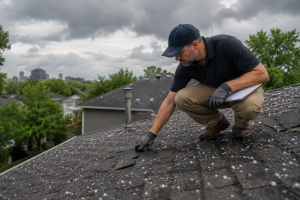 After a major hurricane, every reputable roofer in the region is booked solid within days. Knowing who you will call before the storm means you are not choosing in a panic among the storm chasers who flood the area afterward.
Pick a local, established company you can verify, and keep their number somewhere you can find it without power or internet. Look for a real local address, a track record in the Houston area, and reviews you can check independently rather than a flyer left on your door. A company with deep local roots is also far more likely to still be around when a warranty question comes up years later.
A roofer who already documented your pre-season baseline can compare it to the post-storm condition and record exactly what changed. That continuity makes your claim documentation stronger and your repair faster, because the work starts from a clear picture instead of guesswork.
Be cautious of crews that pressure you to sign over your claim on the spot, since that arrangement is restricted under Texas law. A roofer documents and explains the damage, while you keep control of the claim itself.
Hurricane season does not wait, and the best time to prepare your roof is before a storm is on the radar, not after. A documented baseline today is the foundation for a clean, complete claim if the worst happens.
At Big Easy Roof Claims, we will inspect your roof, flag the weak points, and give you a clear record to start the season with. Call us today to schedule your pre-season roof inspection.
Atlantic hurricane season runs from June 1 through November 30 each year. Activity in the Gulf tends to peak from August into October, but Houston has seen damaging storms as early as July. Preparing by late spring keeps you ahead of the rush rather than scrambling once a system is already forming.
Wind and hail damage to your roof is typically covered by a homeowners or windstorm policy. Flooding is not, because rising water requires a separate flood policy. Many homeowners near the coast need both kinds of coverage to be fully protected, so it is worth confirming what you actually carry before a storm.
It is a separate deductible that applies to wind damage from a named storm, often calculated as a percentage of your dwelling coverage rather than a flat dollar amount. That can make it much larger than your standard deductible. It is worth calculating the real figure in advance so there are no surprises when you file.
Yes, and it is one of the most useful things you can do. Dated photos of an intact roof create a baseline that makes it far easier to show what a storm actually damaged. Store them where you can reach them even if the power goes out, such as your phone or a cloud account.
Make sure everyone is safe and avoid downed lines and standing water before anything else. Then document all the damage with photos and video before cleaning up, and cover any openings to prevent further water intrusion. Keep your receipts and report the claim to your insurer promptly so the process can start while help is still fresh.
